It was a long time ago, now, that I flew into oblivion. A good mid-life crisis will do that to you.
The world I’m from was dreary and oppressive and it was all completely voluntary. Over the course of a lifetime, spirited young children became hopeless and pitiful. That world was wrought with muddled detachment. People were disconnected from their friends, their family, their work, their food, their history, the world itself.
So much of the world was fake, and the things that were real didn’t seem real. Fake had become the norm, and distrust had become the default. Pointing out the falsity of others had become taboo. You were viewed as careless, or unthinking, and your accusations were considered personally offensive. Art, music, architecture, education, charity—it was all a facade for some ulterior motive, but to say so was engaging in defamation. Deep down, everyone was desperate for something real, some hint of meaning, but no one had the slightest idea where to start.
For so long we all lived looking directly at a thin glass veneer. The thing is, when you only look at it, you see nothing more than a reflection, but when you look through it, you see the parasitic substructure that perpetuates the cycle of insincerity and hypocrisy we all lived in.
It was, indeed, meaning that we lacked, and I was getting to an age where I couldn’t ignore that anymore. I would go out into the world and see nothing but a swarm of zombies doing everything the people around them nudged them into doing. I’m guilty of it myself. It’s hard to go against the herd; doing so can get you trampled. But I was starting to feel that even if I do get trampled, going against the herd was still the better option. I was desperate to experience something real and to find some higher truth. I needed to know that there was some purpose to my life. I needed to find a way out of this system of self imposed oppression before it was too late.
It was obvious to me why the herd existed. It was less obvious how to remove myself from it. I, like every other man, woman, and child of my time, turned to technology to find the answer to such pressing questions—though I took a much different approach.
Most are limited to the technology that they’re given. What they’re capable of gets confined to what tools are available to them. Even worse, what they ought to be doing seems to be determined by the things that are available for them to do. They’re born into the world and accept it as it is.
I, for one, don’t accept things as they are. I’m a tinkerer—an engineer, professionally. I make things better, or I make something different entirely. And as I sunk deeper and deeper into adulthood—into the sad reality I’ve been presented with, one full of resigned and discontented souls—and as I came to terms with the fact that I can’t exactly change the world the way I might paint a room or rearrange the furniture, I came to the conclusion that what I can do is find a different part of the world. Unfortunately, there is no civilized place on Earth that has been left untouched by this plague of meaninglessness, so I had to look outside Earth.
Some men hit forty and want to buy fast cars. I wanted to change what it means to be fast. I wanted to go out and explore the universe. So, I threw myself into technology—developing my own technology, that is—and set out to produce a mode of interstellar travel that felt like a train ride.
Once you figure out how to negate inertia, you can basically do anything—fly through walls, teleport across the galaxy, anything. For years I slaved away, going to work, coming home, doing calculations at the kitchen table, and running experiments in the garage, until finally I had something. A circular machine about the size of a car with a cabin in the center for a pilot—derivative, I know, but it worked. The saucer shape was necessary for the ring of plasma and liquid mercury to spiral around at just the right speeds to produce a certain vibrational energy and achieve the anti-gravity effect I was looking for.
I flew high, up above the clouds, and on a whim I dropped down to the ground at quite alarming speeds before coming to a halt two feet above my neighbor’s pool. I flew around the world; it took me several days but when I got back to my garage only a few minutes had passed. Time worked differently in the ship.
I went to the moon and I planned on coming back, I did, but when I got there I looked down at the Earth and saw how small it was and how big the rest of space was and I thought, “Well, I’m here now. I can just keep going.” And truly, I could. There was nothing holding me back and my insatiable curiosity only pushed me forward. So I pressed on.
Before I knew it I was at the moons of Saturn, then Pluto. Then nowhere—just a whole lot of asteroids. It felt like months getting out there, but I knew only minutes had passed on Earth. In fact, only minutes had passed on the saucer as well, but my mind was moving much faster. It was as if my consciousness existed outside of time altogether. My body only moved with enormous focus to pilot the ship. Time went so slow that nothing happened on the ship without enormous effort. It was like I was high on mushrooms and experiencing my entire life all at once, but my body was heavy and frozen in time. My mind raced so fast I had half a year’s worth of thoughts and I hadn’t even grown any stubble.
Years later—maybe a half an hour in real time—I came to a planet with intelligent frog-looking things. All of their buildings were one story with very high walls for privacy, but I didn’t see a single roof in my time there. They had machines and factories, but nothing resembling cars. They jumped everywhere.
Another planet was run by scaly, six-legged speed demons. They were not intelligent, just predators that ruled with an iron fist. They ate anything that moved. Much of the planet resembled plant life.
There were planets with intelligent life all over. Many of the life forms from different planets seemed to have a common ancestor, although it was a distant ancestor for sure. I managed to learn the language of some fish-headed people with thin and nimble tongues. They pronounce their ‘S’ sounds very strongly. A group of them directed me toward a planet they called ‘Canturion’, a hub for interstellar travelers. That was my next stop.
Everytime I stepped out of my ship, I continued to age at a normal speed and time went by at a normal pace. An overnight stay here or there meant another day lost on Earth; it started to add up. I didn’t even quit my job, I just stopped showing up. I didn’t think anyone would notice and, frankly, I just didn’t care.
When I was traveling, I had years—decades even—to think to myself. That sort of thing can drive you mad. But I managed. I used to think that originality was the product of long, intense solitude. However, in all that thinking it occurred to me that while originality might be found in solitude, it’s inspired by experiences in the real world. For as long as I was on that ship, I was putting a pause on time and a pause on life, and only so much original thinking could be done before I’d run out of things to think. Eventually, all that was left is why I got on the ship in the first place.
Canturion was an exceptionally busy place. It was a gas giant with dozens of inhabited moons, each of which housed and hosted creatures from all over the galaxy. It was a beautiful thing to look up and see the orange swirls of Canturion, to look over and see the twilit sky streaked with lights of vehicles moving from one moon to the next at supersonic speeds, to look around and see faces of all shapes and sizes and colors. Intoxicated by the vibrant energy, I parked my ship in a storage unit I paid for with energy pods and found a motel to stay in for a while.
One evening, the moon I was on crept into thirty days of night; Canturion had eclipsed us. The weather had immediately cooled down and as I was waiting in the city for public transportation I noticed a floating ball of fire and moved closer for warmth. This was something I had seen on other planets and assumed it was there for light and heat. After a moment, it swiveled in place and a rhythmic hum emanated from the orb. I wasn’t sure if my ears were deceiving me, but then I remembered I had heard people communicate through hums before. Its flames went from gold to turquoise and I stepped back, letting out a startled shout. A passerby told me in a language I recognized that this orb was a “gnarmand ih kwa,” which I could only translate into “fire of thought.” I looked on at the sentient ball of fire with awe and reconsidered what I had seen on those other planets.
Curiosity got the best of me and it wasn’t long before I had become friends with a living fireball whom I called Buddha; the humming sounded like meditative mantras. Funnily enough, once I learned the language—a sort of buzzing morse code—he was keen on telling me I move too fast and I need to live in the moment. I found that ironic considering how slow I moved on my way to Canturion.
Buddha was a sentient orb of organic plasma and something about his metabolism made him perpetually burning hot, flames and all. He had control of his density and floated about as he pleased. These “gnarmand ih kwa’s” didn’t eat; they simply absorbed nutrients from the surrounding air. As you could imagine, a species of living fire didn’t have any natural predators, and since nutrients were always readily available in the air, they didn’t worry much for food. They were self-sustaining and had endless optimism and peace of mind. Buddha was no exception. Whenever I was around him, he was a jolly fellow—I could tell because his color changed with his emotions and he was usually a golden yellow.
For the few months I had known Buddha, we learned each other’s languages and I asked many questions about his home, his culture, his story—the kinds of things you would naturally want to know about a living ball of fire. In turn, I answered his questions of the same kind and, on self reflection, I found my answers to be quite glum. I came to the conclusion that I had been infected by the detachment I was surrounded by before leaving home, something I hadn’t shaken, despite now living a life hopping from planet to planet.
One day we took a stroll through a bright garden where every organism on display looked like an O’Keeffe painting. Seeing such vivid colors come to life and move gracefully in the warm breeze mesmerized me. To know a living being could achieve such beauty and harmony with the world gave me a light feeling, like I was floating in a river of dreams that flowed into a sea of reality, and I sat at the delta, reborn amidst the rush of energy.
“Incredible,” I kept saying. For once, Buddha didn’t have to tell me to slow down.
“I hoped you would appreciate this place,” he hummed. “You seemed to need something to lift your spirits.”
I continued walking through the garden exploring what it had to offer and he followed at a close distance.
“Are there no gardens on your world?” he asked.
“There are,” I replied. “It’s easy to forget about them, though.” His color wavered to a deep orange before quickly returning to a golden yellow. It was difficult communicating with him because he was just a humming fire; there were no facial expressions and no tone of voice. His colors changed, but that occurred so rarely it was hardly a factor.
“Are there organisms like this on your world?” he asked.
“Probably, yes. We have flowers. I’ve never seen flowers like this, though.” His color changed to a deep orange again before returning to a golden yellow. The flames burned steady in the air.
“That surprises me. You have a tireless curiosity, and yet there are things on your home planet you haven’t seen.”
I looked at him and asked, “Have you seen everything on your home planet?”
“Surely not. But I don’t have the same motivations as you. I’m not driven to find meaning and authenticity. I don’t have many questions left unanswered, and the ones that are are simply unanswerable. I am content.”
I was taken aback. “I’m content,” I argued. I waved my arms and said, “Look at where we are. I’m content.” There was no response. “What makes you think there aren’t answers out here?”
“There are answers everywhere,” he said, stoic as ever. “Your home is full of them. You want meaning? You’ll find it at home. You want beauty? You’ll find it at home. It’s all relative to you, defined by you. You’re a product of your home. It’s where the world put you. It’s where you’ll find harmony. It’s where you belong. You didn’t need to come here to find the answers you’re looking for. You just needed to find the strength to look within.”
“Why are you telling me this?” I shook my head in confusion. “My home is depressing. The people are depressing. There wasn’t anything to gain from staying. I like my life, living amongst the stars.”
“You could change things. Improve them. You could find meaning in that. Others just might follow you,” he said. “Instead, you’ve been spending most of your time floating between planets—outside of space and time and reality itself—drifting further and further from the realest thing you’ll encounter, the thing you’re most naturally attuned to, the thing that you refuse to accept is a part of you. Your home. You’re here looking for meaning and little do you realize you’re wandering through the Tower of Knowledge.”
I paused for a moment. “The Tower of Knowledge?” I asked.
Buddha flashed blue for a moment before returning to his natural golden yellow. “It’s just a saying. Forget I mentioned it,” he said sternly.
“Oh, come on. What is it?”
“Not all things are meant to be seen. And not all eyes are meant to see. Leave it alone.”
“I’ll consider everything you just said—I will. I just want to know a little more about this Tower of Knowledge.”
“It’s a fabled tower,” he said. A yellowish green overcame him. I had never seen that before. “A myth. An ancient library on an artificial planet the size of a small star.”
He went on to tell me about this library. The tower was the sole building that stuck up above the horizon on this artificial planet. When you arrive on the planet, you immediately feel a mystical presence in the air.
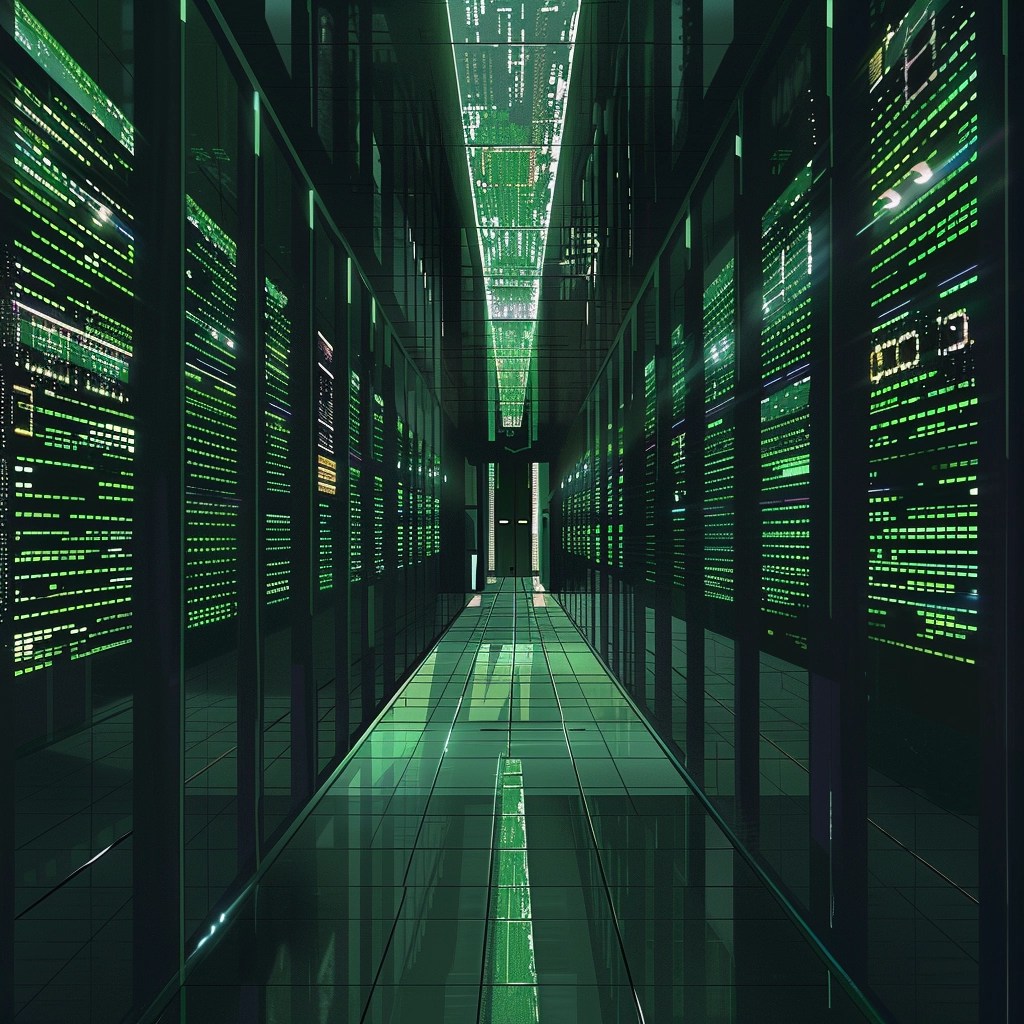
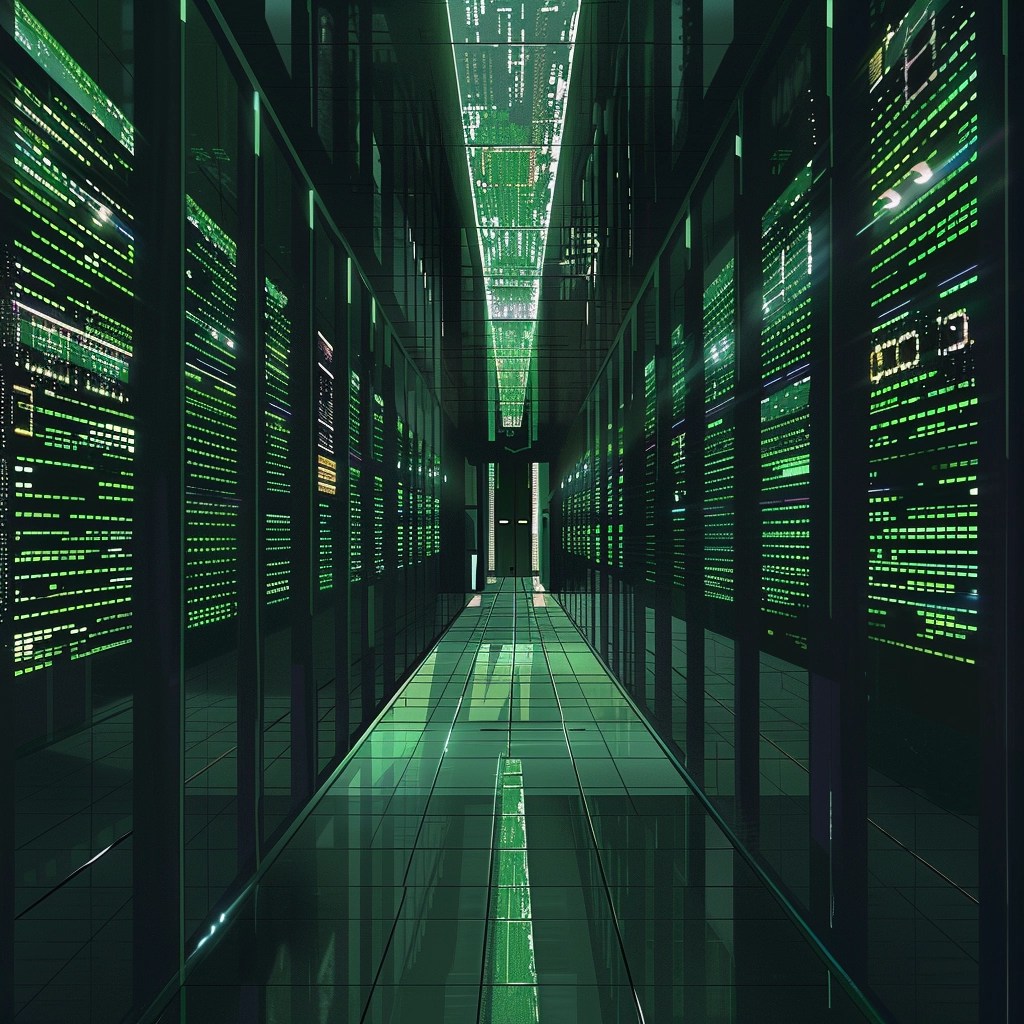
You enter the tower through the top and descend along a spiral staircase down the center of it. On the outside of the staircase are doorways into rooms and each room contains several thousand monitor displays. Each monitor display contains a sequence of exactly one million digits, all zeroes and ones. Each new sequence is just a little different from the last. It’s assumed every possible sequence can be found in the library. It’s assumed because the end of the spiral staircase has never been reached. It appears the staircase descends into the artificial planet forever, defying all logic and all known physics.
The zeroes and ones have been interpreted as binary code and from there, have been translated into thousands of languages. The result of this is what fuels the mythos of the Tower of Knowledge. Contained within this finite planet is an infinite staircase. And surrounding this infinite staircase is a finite set of documents which collectively produce an infinite amount of information. All truths, all facts, all theories, all ideas can be found in the Tower of Knowledge, but it’s buried within untruths, nonfacts, false theories, and poor ideas.
“This is the dilemma of the Tower of Knowledge. Researchers go in there and spend their lives scrolling away through each document at each monitor, one by one, reading and interpreting and translating and misinterpreting and mistranslating, seeking some discovery—exactly what it is they’re looking for, they don’t quite know, but they assume they’ll know when they find it. They scroll looking for truth. They scroll looking for meaning. They scroll to determine if scrolling is worth it. They scour the library in search of some unknown ideal and waste their lives doing it.”
“And where is it?” I asked.
Buddha turned and floated away before pausing and turning back.
“It is an ancient structure—some say it’s eternal. The library had a way of possessing curious minds and corrupting civilizations. The planet was cast out to the edge of the galaxy by a powerful race who have long since come and gone. Its exact whereabouts can’t be known.”
“I bet there’s a document in that library that explains its entire history,” I said, highly intrigued. “Including where it is now, where it will be in a million years, and where it’ll be in a billion years.”
“And infinitely more documents lying about its history and lying about its future. I beg you not to go seeking it out. It may not even be real, and if it is, its contents are most certainly not.”
“I wouldn’t even know how to find it,” I said.
“So you won’t seek it out?” he asked.
I thought solemnly. “I don’t know. I’m curious, but I still wouldn’t know how to find it.”
“Please, don’t…But if you do, be careful of your time, and don’t wander.”
That comment got my mind going. I didn’t need to be careful of my time. In my ship all I had was time.
The idea of a Tower of Knowledge was fascinating and the fact that its location was unknown was a challenge, but that made it all the more fascinating. I viewed it like an engineering problem that needed to be solved—by brute force if nothing else.
We finished our walk and I assured Buddha I would not go looking for the library, but by the time I got to my motel I was certain I needed to find it. I told myself I would take on this one last adventure, and then return home to live life anew, armed with the knowledge of the galaxy.
I got a good night’s rest and the next morning I set out to Canturion’s largest moon to do research on this Tower of Knowledge. I found several documents in a database referencing it as nothing more than a myth. The fact that it was even mentioned was reassuring. There was one document that referenced a historian with an unpronounceable name who claimed the tower was real. I went to their home planet, Godira, to find out more.
Upon arriving on Godira, I managed to find more information about this historian and discovered they had died several years ago—I was unsure how long a year was on this planet. I was able to track down a relative and was pointed to the planet Ezlounda, where a whole culture believed the Tower of Knowledge myth to be true and claimed their ancestors were the last ones to explore it before the Vodlokians took over and demanded the artificial planet be destroyed or sent away. The Ezloundans had the last known location of the tower, the general direction, and a rough estimate for where it might be now. By rough estimate, I mean a swathe of the galaxy thousands of lightyears across. The Vodlokians cast out the planet millions of years ago, so the projections had a wide range and the figures were inexact. The Ezloundans never pursued the Tower of Knowledge because it was too large of an area to cover in a lifetime.
I had time on my side. And now a map to go with it.
The map the Ezloundans gave me was a circle containing the galaxy and roughly an eighth of the galaxy highlighted, indicating where the Tower of Knowledge might be, the widest part of the highlighted area being at the edge of the galaxy. I had a long way to go.
I continued to make stops on populated planets, but the further I got from the center of the galaxy, the less people there were who knew languages I already spoke. I had decided I wanted to go back to Earth after this was over, and I wanted as little real time to pass as possible. That meant I couldn’t be spending time off the ship trying to learn a whole language just to explain where I want to go and try to maybe get some better directions. I was committed to sticking with the map I had and staying on the ship for as long as it took to find the Tower of Knowledge. That was what feels like a century ago and for a while now I’ve been wondering if that was a mistake.
Thinking about the tower is what keeps me going. The genius and dedication that must have gone into creating such a thing. To keep myself occupied, I ran the numbers. If every document has a string of binary code one million digits long, the number of documents needed to complete every possible sequence is orders of magnitude larger than a googolplex. In theory, there’s less atoms in the galaxy than there are monitors in the tower. This, of course, doesn’t make sense, but neither does an infinite staircase inside a finite planet.
The binary code for each and every one of these documents can then be translated into any language with a fixed set of letters or words. Most of these translations are meaningless, pure babel, but you don’t know that until you read it, and until you do, it very well may hold the most fundamental truth a man could come across. The interesting thing about translating the binary into language is it opens up the possibility for what is said in the Tower of Knowledge to include even more knowledge, true and not true. The binary from a single document can be translated into two separate languages, and from that one document you can have two completely separate meanings. On top of that, two separate documents that don’t share a single digit in common can still be translated into two separate languages and still come to have the exact same meaning.
The sheer amount of documents and the way they’re presented cheapens the very idea of meaning. A single document can have as many interpretations as there are languages in the universe. And the very nature of the tower guarantees that for every thing that is said, the opposite is said, and every iteration in between. Why did the builders of this expansive archive of knowledge include facts that must be false? And how is one to determine true from false? Do these documents have to be correlated with something real outside the tower in order to be considered true? What, then, can be said of more abstract truths? Perhaps the ‘false’ facts simply occurred at another place and in another time. Maybe the infinitude of this tower, at the very least, correlates to the infinitude of the universe. In which case, it’s all true.
And even this pales in comparison to the infinitude of my mind…
When I do find the tower, it will be worth it. I’ll lay my eyes on a sight no creature has seen in a million years. I’ll explore the tower and discover information that precedes any civilization alive today. I alone will oversee every true fact and every false fact and every true perception of false facts and every false conception of true facts and for as long as I’m there, I will be the arbiter of what is true and what is real, and if that’s all of it, so be it. The triumph, the greatness. This tower is my light at the end of the tunnel. And when I’m done, I will return home having passed through the light at the end of the tunnel, wholly enlightened, unburdened by the trivialities of real and not real because I know all and I accept all and this will be my gift to the world.
So far this journey has been long and fruitless. But I remind myself that it’s only been a year and change since I left Earth; the rest of the time has just been me, stuck in my head, moving through time at a different pace. Years and years pass and I have years and years to go and it’s all spent in isolation.
Thoughts come and go and I don’t know where they come from and I don’t know where they go to, but it’s certainly not me anymore. In order to hold on to some semblance of myself, I repeat my life’s story over and over. I recall my childhood, my family and friends, my career, bosses I liked and disliked, girlfriends, my ex-wife. I recount American history and world history and all the animals I can think of. And I tell myself this story—the story of how I ended up here, on this ship, alone, in the vast emptiness of space, hurdling toward a fantasy. I tell myself all these stories to remember what little facts I can, but I know every time I tell a story it’s a little different from the last, and I don’t know how many times I’ve repeated myself.
I hacked time and lost all sense of reality. I spend my time staring at the screen before me, hoping my scanners pick up a hint of the Tower of Knowledge, scrolling and scanning in all directions. Scrolling, scrolling. Searching for knowledge. Seeing nothing. Scrolling and scanning and scrolling and filling the void with babel in this endless wakeful night.
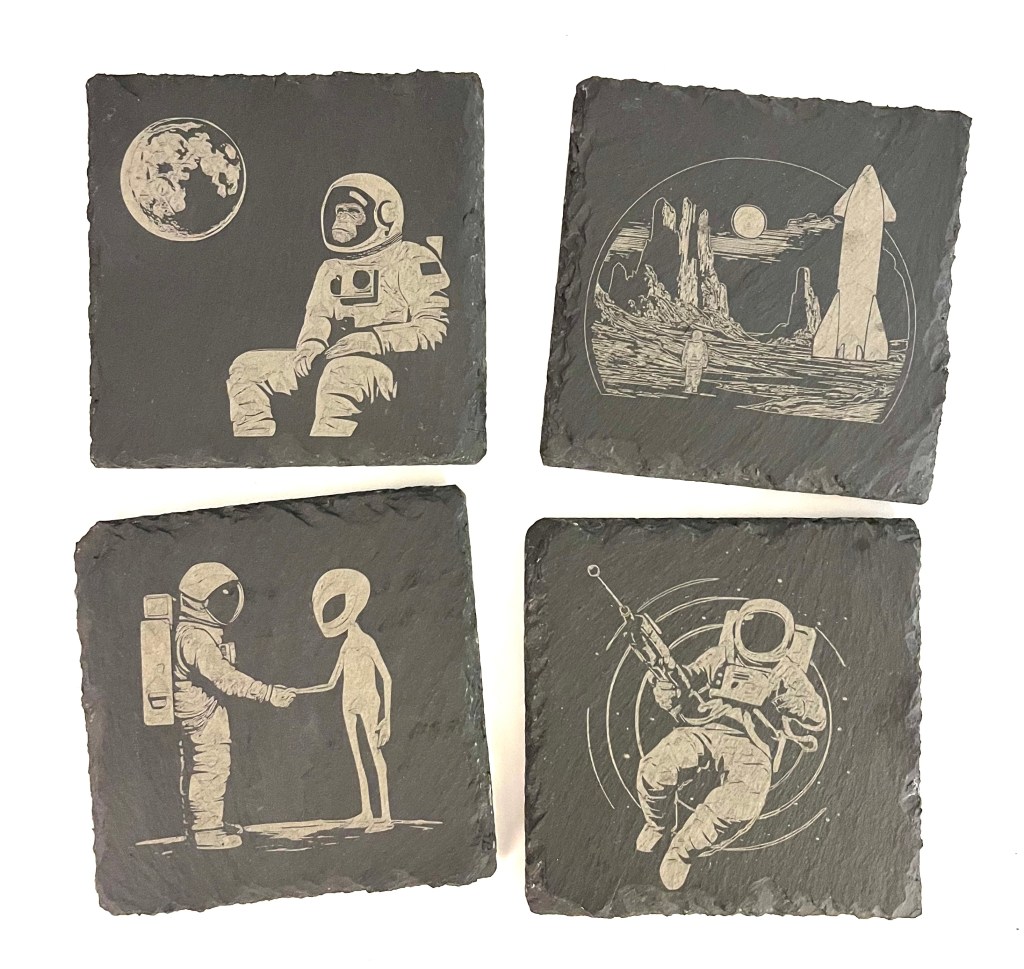
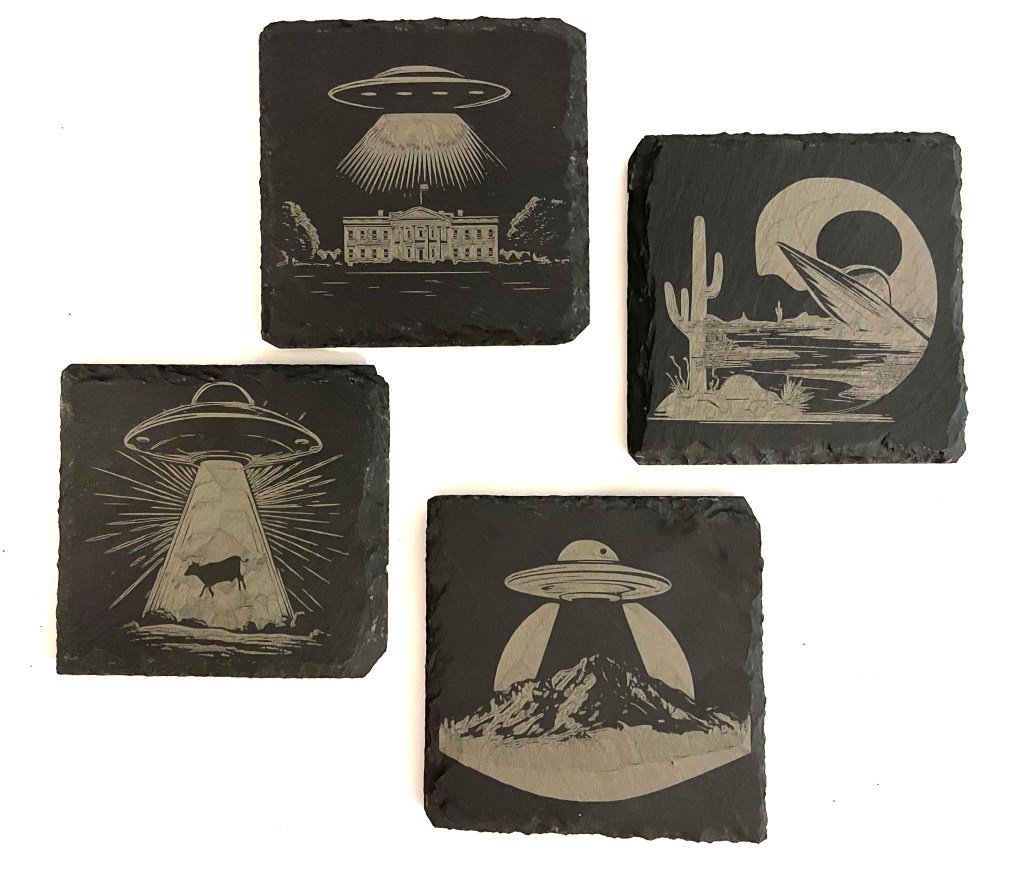
For fun, scifi themed coasters, check out my Etsy shop here: https://scifideco.etsy.com
If you enjoyed this story, be sure to share the link with friends and sign up for my newsletter to never miss a new short story:


 Brian J Mundell