Dr. Rose injected the anesthetic and reached to the back of the boy’s head to power down the hardware. There was no resistance from the boy. A small light behind his ear changed from blue to red as the boy’s eyes waved closed. The doctor turned on a light directed at the boy’s head. The clean room in the doctor’s basement was illuminated with a sterile white glow.
“My perfect child,” Dr. Rose said. The eight year old boy was the rogue scientist’s genetic twin, a biological clone integrated with equipment throughout his body and in his brain. “You never fail to impress me.”
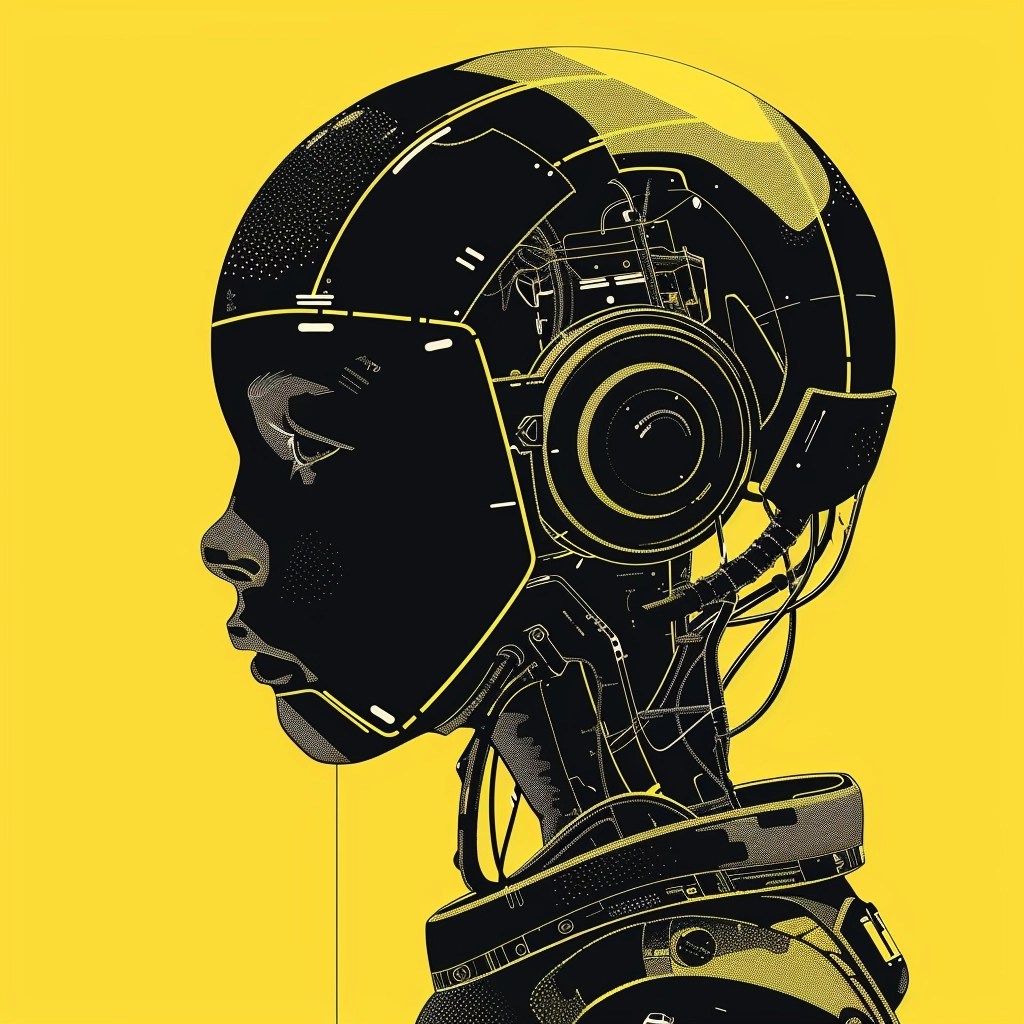
The boy sat propped up in a seat, much like a patient receiving brain surgery. This operation was far more routine, however. Dr. Rose had already removed the boy’s scalp to reveal a metal panel wrapped around the back of his head. The doctor drained fluid and proceeded to remove the panel as well. Behind it was a thin layer of wires and flexible circuit boards that meshed into the far reaches of the boy’s brain.
The doctor carefully twisted a wire out of the boy’s brain, exposing the tiny chip at the end. He then connected his computer to the chip and ran diagnostics on the boy’s hardware and software, as he has done three times a year since the boy was a developing fetus in a small tank of artificial amniotic fluid. Everything checked out.
When the doctor was finished with diagnostics he pulled out another wire. “I’ve been waiting years for this,” he said to the unconscious boy. He reached for a tiny receiver that was laid out on the table beside him and attached it to the wire. He then fiddled with his computer to ensure the new upgrade worked. After he was satisfied, he unplugged the boy from his computer, tucked the wires back into his skull, returned the panel, ensured it was sealed, and injected fresh fluid in the skull.
The doctor stepped away to record a video log. “Year eight, month nine,” Dr. Rose said to the camera. The boy was unconscious in the background. “I just completed the final hardware upgrades on Allen. The receiver will allow him to connect to the internet and access information on a colossal scale. Up until now, he has been completely offline and his only input has been from reading and day-to-day experiences. He has been reading from a very young age and his math skills are exceptional. I’m not surprised; I was the same way. The neuronal tracker has provided excellent data on his development and I’m excited for what changes will come with this new upgrade.” He swiveled his head and glanced at his young clone. “It took hundreds of tries to get a viable test tube fetus. Once he broke that barrier and fully developed into a baby, there were no hiccups…I’m amazed.”
Dr. Rose turned back to the camera and ended the recording. He returned to his creation, turned the hardware back on, set his scalp in place and injected a stimulant into Allen’s arm. He walked around to face the front of the boy. With his scalp on, he looked completely normal. Allen was still unconscious, but his nose twitched sporadically as the stimulant began to take effect. The doctor watched affectionately, fixing Allen’s hair.
Allen squeezed his face and opened his eyes half way, blinking several times. He removed his head from the chin rest and sat back in his chair, still groggy.
“Are you feeling alright, son?” the doctor asked.
“Yes, father,” Allen replied softly.
“Good. Are you noticing anything different?”
Allen was fully awake, looking at his creator. His eyes were fully artificial: grayish-white in color, with blue irises and dark black pupils. The artificial eyes were hardly noticeable from a distance, but the doctor had a hard time looking his boy in the eye up close. Dr. Rose slid the chin rest out of the way. The boy looked around the room and blinked a few times. Then, he kept his eyes closed for a long moment. He opened them again and looked at his father.
“I see a command prompt when I close my eyes.”
“You’re supposed to. What does it say?”
He closed his eyes once more. “It says, ‘A new device has been installed. Allow access?’” He opened his eyes. “What does that mean, father?”
“It’s a new device. I connected an internet receiver to your brain. It’s asking if you’ll allow it to access your external processing unit. You’ll be able to interface directly with the internet the way you do with any other files you have saved on your processor. Go ahead. Choose yes.”
Allen closed his eyes and listened to his father. He focused on the prompt and thought, yes.
“Search my name,” Dr. Rose suggested. “I’m sure you’ll see some news articles and what not.”
Allen was immediately able to download a handful of articles simultaneously. He knew and understood them without having to even read them. There was so much information coming at him from all different sources. Every new headline was a point of intrigue. He followed link after link, completely unfiltered—without hesitation and without control. He didn’t even have to formulate his thoughts; the device anticipated his every move and gave him what he wanted.
Dr. Rose watched his son experience this new way of interfacing with the world. The boy furled his eyebrow anxiously. He relaxed his eyes as if he were about to open them, then violently squeezed them shut again.
“What’s it like, son?” Allen’s head began to wobble slightly and he was moving his lips, mouthing words incoherently. Dr. Rose put his arm on the boy’s shoulder. “Son,” he said.
Allen opened his eyes. The black pupils were prominent.
“I never really had a reason to use my processor before,” Allen said. “There’s so much stuff out there.”
“I didn’t want to overload your mind. I waited until I thought you were ready.”
“You think I’m ready now, father?”
“I think so. You’ve got a good head on your shoulders.”
Allen smiled and stood up. “Can I go play now?”
“Of course,” Dr. Rose said.
Allen ran out of the lab, around a corner, and up the stairs. “Maverick!” Dr. Rose heard him shout upstairs, looking for his dog. There were fast paced footsteps, as if they were chasing each other. The doctor went over to his computer and combed through the new data.
The neuronal tracker has been tracking Allen’s brain development for as long as he’s been alive. Every individual neuron is mapped and every neuron activation is tracked. Every single memory, thought, and emotion Allen has ever had is recorded in this map of brain cells. The data is there, it just needs to be interpreted. The problem is no one has precisely cracked the code on how to interpret it.
Dr. Rose wrapped his mind about how to start interpreting this data as he fiddled with the files. For every mental state that we experience, there is a corresponding physical state of the brain. It is understood that when we feel a certain emotion, certain parts of the brain are being activated. The same can be said for accessing memories, motor function, sensory processing, etc. But we don’t have a precise mapping, neuron for neuron, of how these experiences come about. Nor can we predict how one experience may lead to another. The data being collected from Allen could hold the key to all of this. This data, Dr. Rose thought, will llead to the next iteration of artificial intelligence—artificial consciousness.
He transferred the new data, updated his models, and went upstairs feeling satisfied. The dog was barking over and over. The doctor followed the sound of the barking and entered the living room where Allen laid on the floor with his eyes closed and his head wobbling side to side.
“Allen,” Dr. Rose said, walking over to him. There was no response. The dog kept barking. “Allen!” he shouted this time. Still no response. He shook the boy back into reality. The doctor saw his reflection in Allen’s eyes. They were dark and removed. “What were you doing, Allen?” the doctor asked.
The boy mumbled, “The internet. I need more.” He closed his eyes and laid back down. “I want more.”
“Hey,” he said, shaking his son. “Hey, Allen! It’s great that you want to learn. But this is the real world. Allen!”
The boy’s eyes remained shut, head still wobbling. No amount of shaking could bring him back. His attention was focused on something otherworldly—something artificial. He didn’t respond to touch. He could feel, he just paid no mind to it. He had fully retreated into himself and dissolved into a digital landscape that would always offer something more.
“Open your eyes, son!” Dr. Rose shouted. The boy’s head continued to wobble.
For fun, scifi themed coasters, check out my Etsy shop here: https://scifideco.etsy.com
If you enjoyed this story, be sure to share the link with friends and sign up for my newsletter to never miss a new short story:


 Brian J Mundell