“I don’t know how black holes work,” Monge said over the comms.
“We’re gonna find out,” Polk said.
“Monge,” Stohr exhaled, as if he was in pain. He had something to say, but the silence said it all.
“Yeah…” Monge replied. “I know.” Despair, regret, and grievance weighed heavy, tamping his voice down to a bitter whisper.
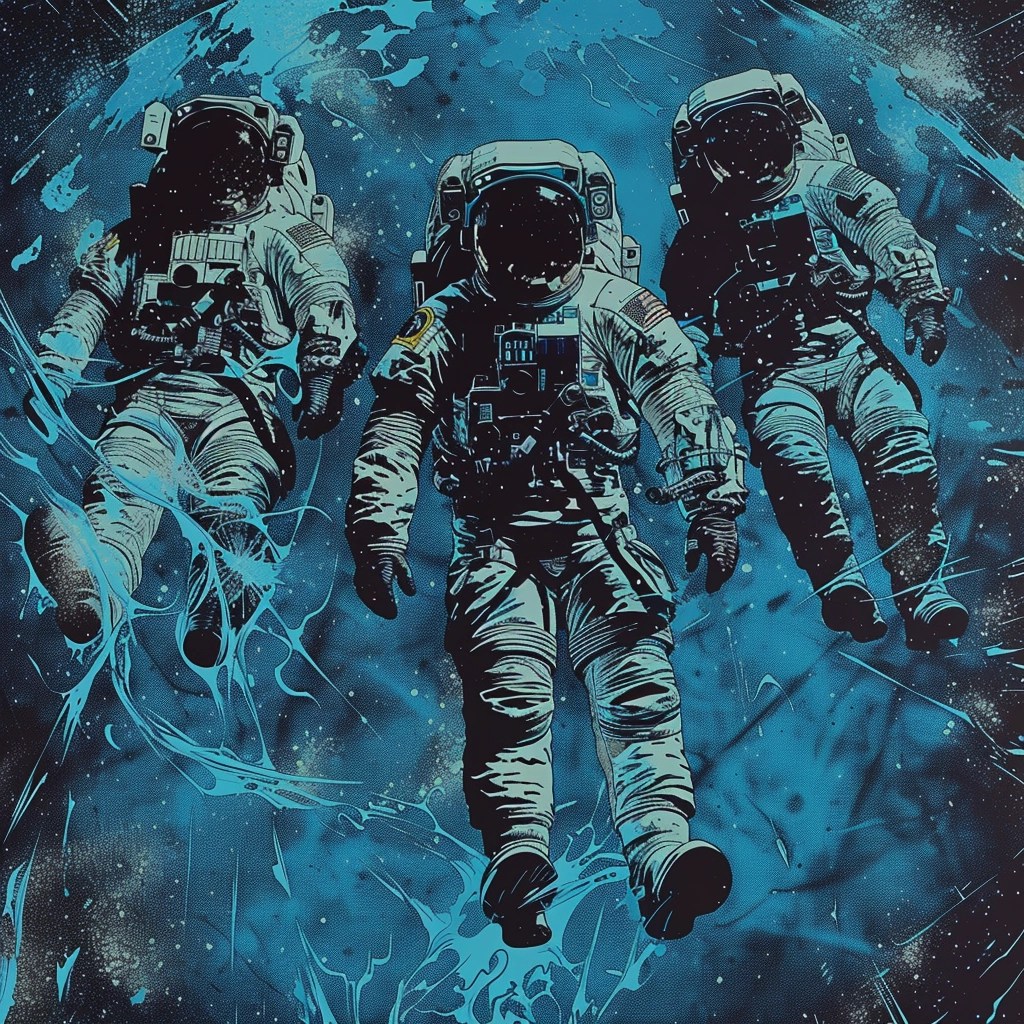
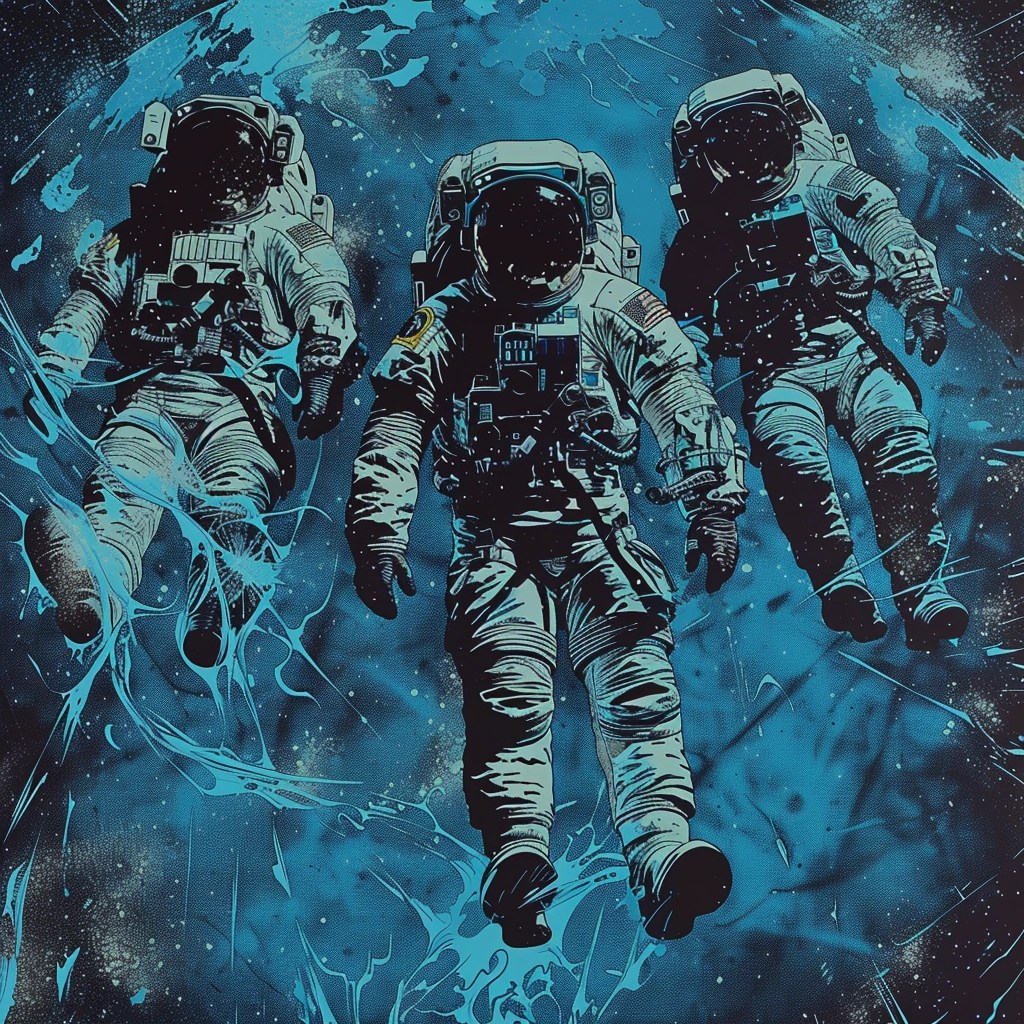
The three men drifted in space with nothing but their spacesuits and a rope that connected them to each other, but detached from their spaceship, which was a mile away from them for all they could tell.
“There was a lot we could have done differently,” Polk said. He was always the voice of reason. “It doesn’t matter now.”
They were about twenty feet apart from each other. The rope held them together, but they weren’t exactly clamoring to get closer. Besides, with their comms they felt like they were right in each other’s heads.
The event horizon was mysterious. There was a clear point of no return, but space was so distorted it was hard to tell exactly where that was. Light from distant stars gathered intensely around the circular edge of the horizon, creating a disc of light—a halo that glowed around utter darkness.
“Polk, how long do you think it’s gonna be?” Monge asked impatiently.
“Till what? We die?”
“Till something happens. Anything,” Monge begged.
“Our oxygen will last us a good two hours,” Polk replied. “We might hit the event horizon before then. We might not.”
“Is there any chance we can access the ship from here,” Stohr asked Polk. “Maybe we could at least send a message back home.”
“They’re thousands of lightyears away. It’s not gonna reach them,” Polk said.
Stohr sighed. “You just had to get your music player, huh Monge?” he said angrily.
“You’re the one that dumped it!” Monge shouted defensively.
“A guy can only take so much of Billy Joel. I warned you.”
“Shut up about it,” Polk said. “You’re both idiots.”
The spaceship was moving further and further. Polk couldn’t tell if they were moving toward the event horizon that fast or if the ship was floating away. He looked deeper into the void and saw twinkling lights. It was faint, but it looked like there was a thin streak of dust around the equator of the event horizon. The contrast between light and dark was striking.
“I’ve been weightless before,” Stohr said. “But this is something else. There’s nothing confining us. No base to hold onto or push off of. We’re set adrift in the void of space, doomed to be crushed by the infinite weight of a supermassive blackhole.”
“Yeah,” Monge said. “And somehow, my mind is still thinking about what to have for dinner.”
“There’s just—there’s too many stars,” Stohr continued, growing uncomfortable. “They’re everywhere. I can’t keep looking at this.”
“Just calm down,” Polk said. In life or death situations, he was always the one to keep pushing and find a way out. “There’s no sense spending your last moments stressed.”
“This is going on too long, Polk. I can’t—I have kids and I just can’t keep floating along, imagining their lives without—” Stohr inhaled sharply.
It was quiet.
A cloud of icy rocks sparkled from far away and rained down on the black hole. They raced toward absolute darkness, their sparkle getting dimmer and dimmer until they flickered out of sight, fully encapsulated.
Monge was trying to toss his music player back and forth between his hands like a ball, but it was proving to be difficult without gravity. He ended up just tapping it gently between each palm to pass the time. His game was interrupted when he collided with Polk.
“Would you watch it,” Polk shot at him.
“You watch it! I didn’t do anything,” Monge replied.
Polk pushed him away. Monge’s music player went flying.
“Polk, what the hell?”
“Don’t be such a child,” he said. He watched Monge twirling around a dozen feet away. “You should take better care of your stuff.”
“Gee, thanks. I’ll remember that golden nugget of wisdom for the rest of my life.” Monge contorted himself to try and hold steady eye contact with Polk, if only from a distance. No luck. “Piss off,” he said.
“Did poor baby Monge lose his music player? Wa-wa,” Polk said, taunting him flatly. “You are the reason we’re out here.”
“Shut up, Polk,” Monge said, angry now. “You’re the reason we’re out here and you know it. You just had to get closer to the black hole. You had to stay longer to get more data. I’m sorry you don’t have a life at home, but that doesn’t mean we don’t either.”
Polk had no response.
“He’s right,” Stohr added quietly. “You have no one at home. Every expedition we’ve ever had, you try to tack on a few more days—make it last just a little bit longer. You spent your whole life working too hard. You had all the friends a guy could need. You could have had any girl you wanted. You could have had a beautiful family. You could have been world class at anything you chose to do. But you chose to keep flying off into space, away from everything, out where absolutely nothing matters—and this time you’re not going back.” Stohr tugged at the rope and spun around to look at Polk. “And you don’t even seem to care,” he scoffed.
“You think I wanted this?” Polk shouted. He shook his head in his spacesuit and bit his tongue. “You’re wrong,” he said. It didn’t make sense for him to wear a facade. “Everything we did out here mattered.” His eyes got glossy, but his friends couldn’t see that from a distance. He stiffened his chin. “I chose my work and I love what we did together. That’s enough for me. I’m sorry you two aren’t going back to your families this time around. I’m sure they’re proud of the work you did, too.”
It was quiet again.
Polk and Stohr both heard what sounded like a crash and a gag over their comms, followed by a high pitched frequency, which flickered into silence.
“Monge?” Stohr said.
They both whipped their heads in his direction, but they couldn’t quite orient themselves.
“Monge!” Polk shouted, tugging on the rope. Polk managed to twist himself and get Monge into view. There was a hole straight through his helmet. The visor was shattered and his face was mangled—much of it completely gone. Monge’s body rotated slowly. Polk glimpsed through the hole and saw clean through to the stars on the other side.
“What? What happened to him? I can’t see,” Stohr asked anxiously.
“A rock smashed through his helmet. He’s gone.”
“Damn it.”
His body floated between them and the blackhole.
“Shouldn’t the air pressure from his broken helmet have spun him around a little harder?” Stohr asked.
Polk looked at the helmet. “The hole went clean through the middle of the helmet. The pressure would have been released on both sides, canceling out.”
“Oh,” Stohr nodded, satisfied with the explanation.
Polk swiveled to look at the ship. Maybe it wasn’t that far off after all. Air pressure, he thought. He swiveled back around to face the blackhole and glanced at Stohr out of the corner of his eye, weighing his options.
A few moments later Monge’s body drifted toward Stohr until it got close enough where Stohr could push it away. He wasn’t interested in getting a closer look at what happened to his friend.
“It feels like it’s been hours, Polk. What the hell is this?”
“The black hole must’ve been further than we thought.”
“How much oxygen do you have left?”
“Too much. You?”
“Same.”
Stohr started squirming in his suit, grunting every few seconds.
“What’s going on?” Polk asked.
He was holding the right arm of his suit with his left hand, kicking his legs out.
“I—have an itch,” he grunted. “I can’t reach my face.” He kicked his legs harder. “This is ridiculous. I can’t even—touch my own—ugh,” he shouted in frustration. “I’m going crazy out here! This weightlessness is driving me insane. I feel like I’m being ripped apart from the inside out. My stomach is in my head! I swear to god, Polk, I’m about to—” He reached up with both arms and planted his hands firmly on either side of his helmet.
“Wait! Don’t do it, Stohr!”
He twisted his helmet off. Once the seal broke, the helmet popped up further. A cold frost moved over Stohr’s face. The pressure coming out of his suit pushed him down toward the black hole, pulling Polk along.
Polk was flung into Monge’s lifeless body, which he pushed aside. It trailed along as the three of them blasted toward the blackhole. Polk was spinning like mad, desperately trying to grab onto the rope. If he could change the direction of Stohr’s suit, he could change the direction he was flying. Maybe he could angle it away from the black hole. Maybe he could angle it toward the ship miles away.
Polk accelerated deeper into the darkness. When he finally grabbed the rope, he gave it a good pull and Stohr’s body spun around. It even came close enough for Polk to grab. But all the air had already been let out and there was no more pressure to be taken advantage of.
Polk was flying straight for the blackhole now, there was no way around this inevitable fate. No way out.
His body stretched thin and his friend’s bodies tangled up around him as he plummeted toward his fate. He looked forward and saw infinite darkness; he looked behind him and saw streaks of stars condense into infinite light as he drifted further behind the event horizon. The weight of his friends began to crush him. He grew lightheaded, and the white light was all he could see.
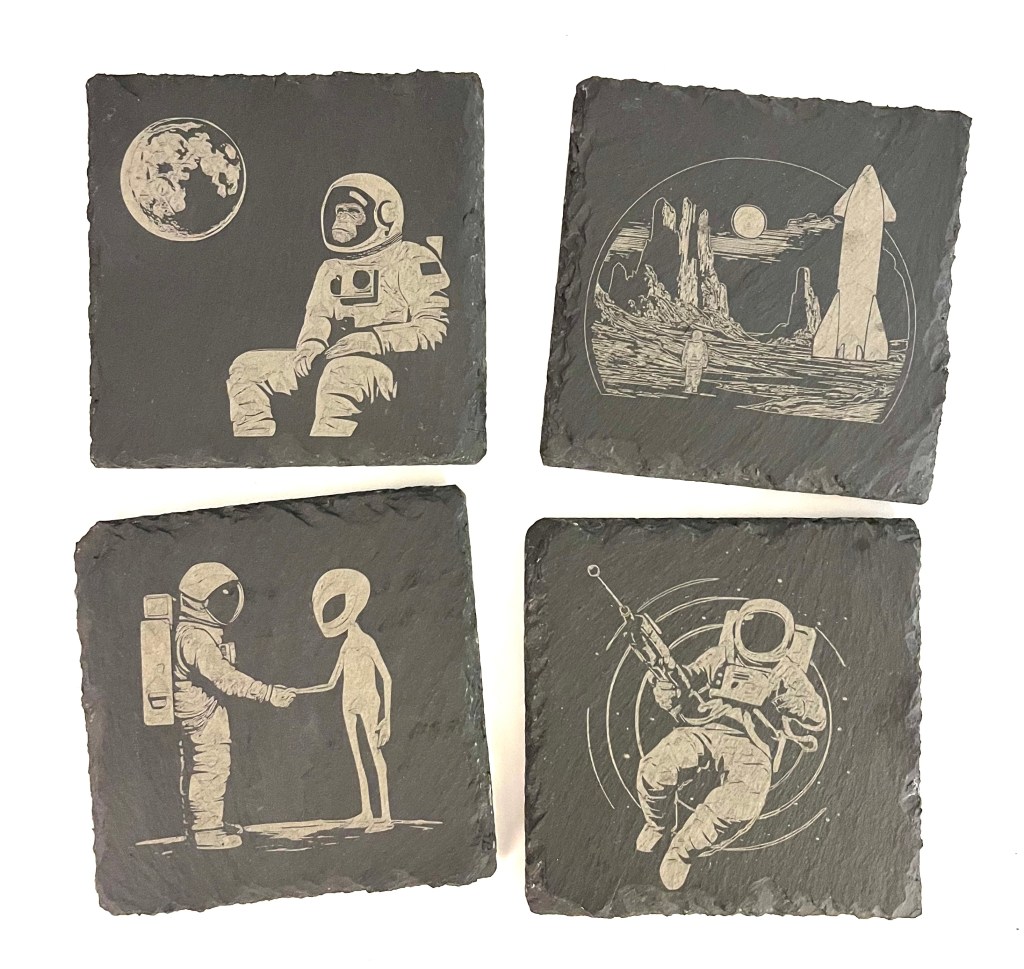
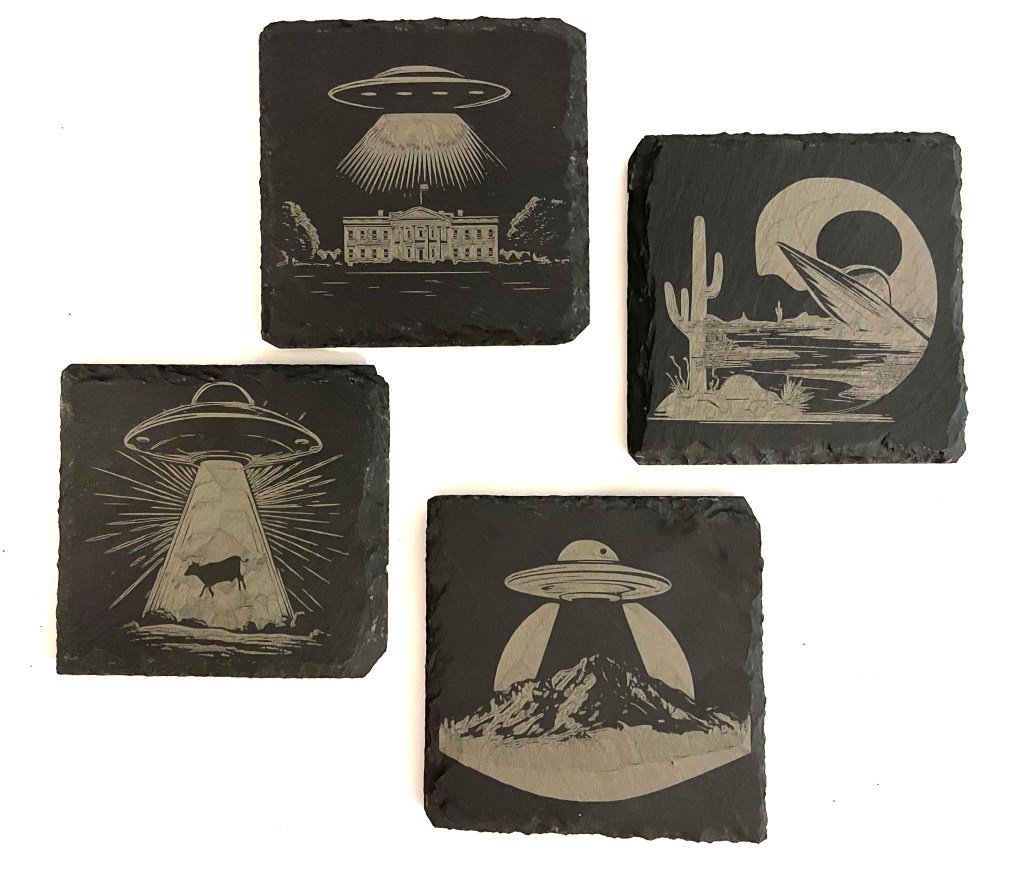
For fun, scifi themed coasters, check out my Etsy shop here: https://scifideco.etsy.com
If you enjoyed this story, be sure to share the link with friends and sign up for my newsletter to never miss a new short story:
Your message has been sent

 Brian J Mundell